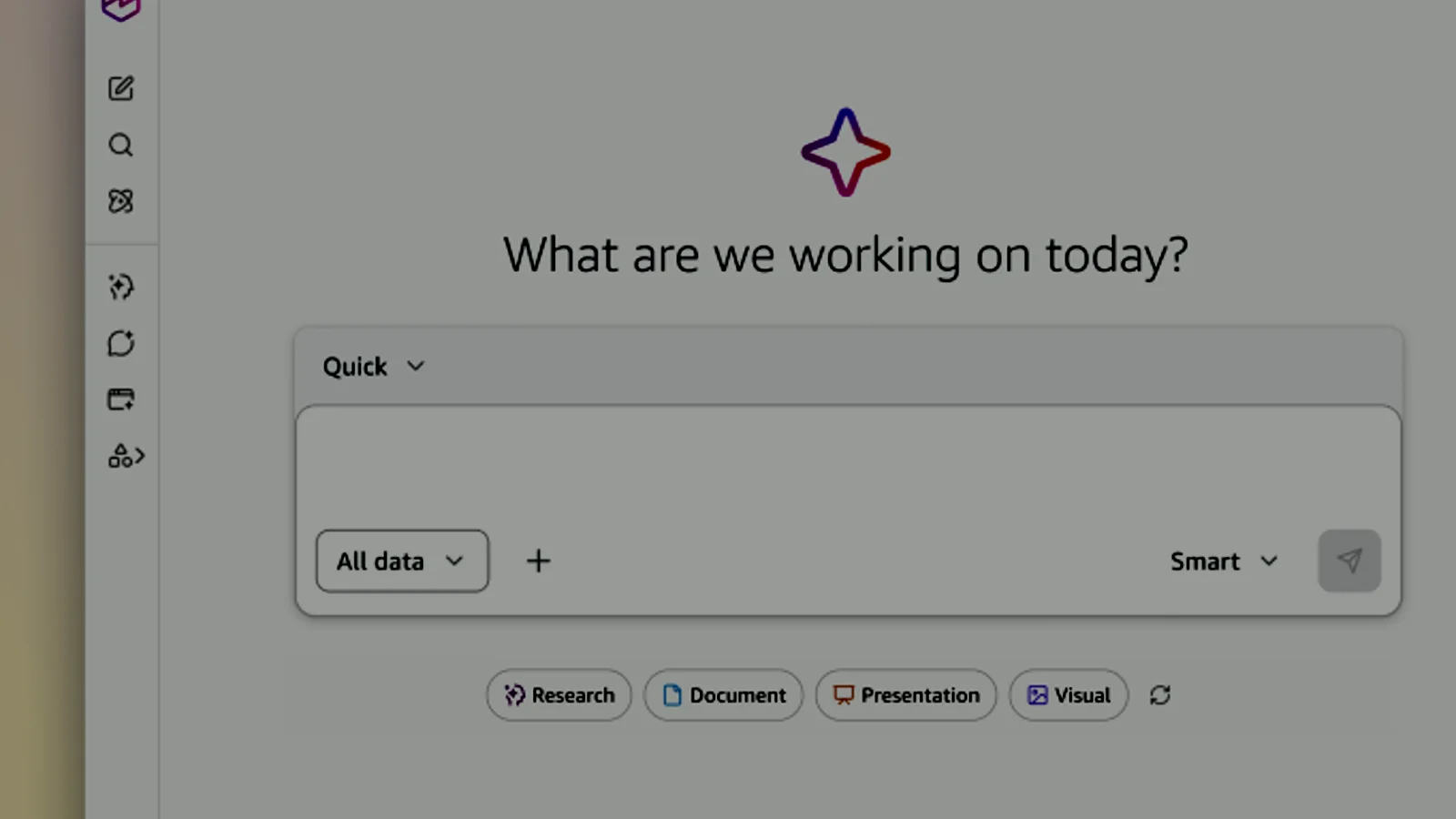
AWS expanded Amazon Quick on June 17 with autonomous agents, multi-dataset analytics, and a redesigned activity feed. The assistant connects to business applications and can learn workflows that continue beyond a single conversation.
Users describe a task in natural language and choose how much autonomy to grant, from step-by-step approval to broader goal-based execution.
Continuous work instead of isolated prompts
Quick agents can follow up on stalled sales, summarize regulatory changes, process purchase orders, and handle other recurring work. The product is designed to keep these workflows running while surfacing decisions that need human attention.
The activity feed brings updates, email replies, Slack messages, and approvals into one conversational interface.
Analytics across several data systems
The new analytics capability lets users ask questions across sources such as Snowflake and relational databases without manually joining every dataset first.
Quick can inherit semantic context from catalogs including AWS Glue, Databricks Unity Catalog, and Collibra. AWS says identity propagation preserves the permissions already attached to the underlying data.
Permission design is the product
The range between assisted work and broad autonomy is useful only when administrators can see which systems, data, and actions an agent can access.
Enterprise adoption will depend on audit trails, approval rules, and predictable failure handling as much as natural-language convenience. The strongest agent is not the one with the widest access, but the one with enough access to complete a defined job safely.