
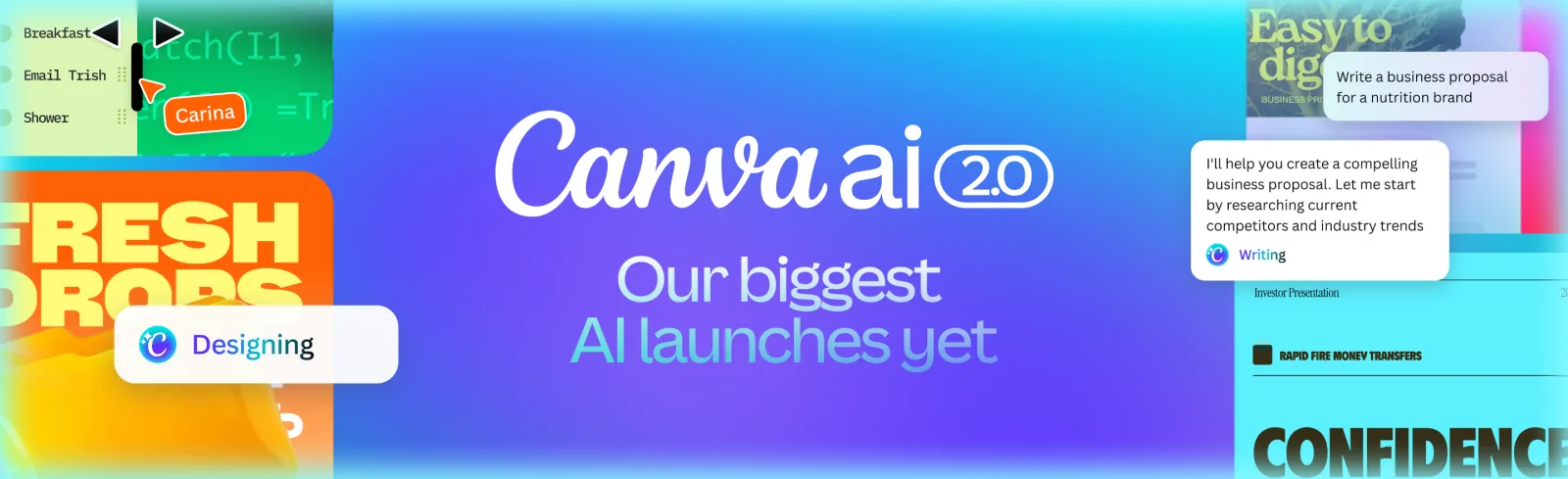
Canva introduced Canva AI 2.0 on April 16 as a research preview, presenting it as the company’s largest product change since launch.
The system is powered by a design-focused foundation model that understands layout, hierarchy, and editable object structure. Instead of returning only a flat image, it can generate designs whose text, imagery, layout, and other elements remain individually editable.
Conversation becomes the starting point
Users can begin with a brief, sketch, goal, or incomplete thought and continue refining the work through conversation. Canva says the agent can coordinate multiple tools while keeping the person free to switch back to direct editing at any point.
Persistent memory is designed to learn how a person or team works, while Brand Intelligence applies connected fonts, colors, templates, and visual rules to new and existing designs.
Six connected workflows
The preview includes connectors, scheduling, web research, Brand Intelligence, Sheets AI, and Canva Code 2.0. Connectors can bring information from workplace tools into a design, while scheduling can run repeated creative jobs in the background.
Canva Code 2.0 creates responsive interactive experiences from a prompt and can import HTML for visual editing. Sheets AI generates structured spreadsheets and connects data collection to other Canva outputs.
Why layered output matters
Editable structure gives designers a path from generation to authorship. A person can change one headline, image, color, or layout decision without regenerating the whole composition.
The remaining questions concern consistency, rights, review, and the quality of repeated output at scale. Still, the move from flat generation to structured design is significant because it keeps human control inside the production loop.