Everyday reactions
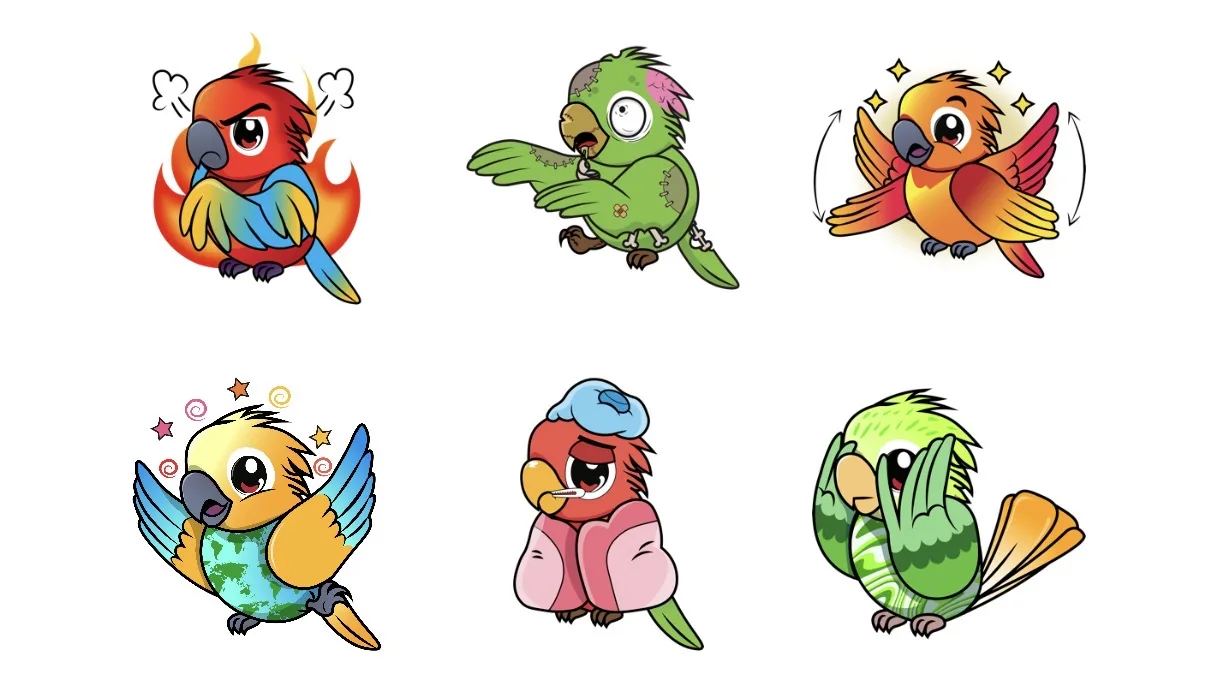
The library covers greeting, care, joy, confusion, frustration, sadness, rest, food, health, and celebration.
A lively parrot reaction set that brings warmth, humor, care, and everyday feeling into multilingual chat.
What we made, why it mattered, and how it came together.
The AnyLingo sticker set turns the friendliness of the core parrot into quick reactions for greeting, affection, celebration, laughter, confusion, frustration, sadness, rest, food, and other daily moments.
These stickers are part of the product, not just campaign artwork. They appear in profile moods and help give tone choices a recognizable face.
The next step is to give the existing artwork a clearer catalog. Human names, useful descriptions, cultural notes, ownership, and accessible labels will make the set easier to find, maintain, and use well.
The library covers greeting, care, joy, confusion, frustration, sadness, rest, food, health, and celebration.
Eye, beak, wings, posture, symbols, and props create variety without losing the parrot's identity.
Stickers support profile moods and visual cues for selected language tones.
Clean transparent assets can sit naturally in messages, profiles, and campaign layouts.
A sticker has very little time and space to work. Eye shape, beak, wing gesture, body angle, prop, and silhouette have to communicate before a person notices fine detail.
A global product adds context. Humor, romance, anger, gestures, and symbols can be read differently across cultures, so the set needs clear intent without pretending every reaction is universal.
What we had to balance
Expressive detail versus small-size clarity
One mascot versus a wide emotional range
Common reactions versus cultural differences
Playful intensity versus respectful communication
Keeping live files working versus giving them human-readable names
Our approach
The parrot remains the anchor while the eye, beak, brow, wings, posture, symbols, and occasional prop create the reaction. Transparent backgrounds keep the outer shape readable wherever the sticker appears.
The art is organized by communicative intent. A simple catalog can connect each asset to a friendly name, accessible description, localized meaning, and approved use without breaking existing product paths.
Users who want to greet, comfort, celebrate, tease, or respond without writing another line.
Users who pair a translated message with a reaction that carries feeling and context.
People choosing a visual mood that can live beyond one message.
Teams that need reliable assets, clear names, accessible labels, and cultural notes.
A familiar character makes a large reaction set feel easy to enter.
The eye, beak, wings, posture, and prop create the first read.
The user finds a greeting, celebration, comfort, laugh, apology, frustration, or another clear response.
Transparent artwork sits beside a message or becomes a profile mood without carrying a fixed background.
A useful label describes the reaction's intent for screen readers, search, and translation teams.
Each feature supports the wider experience instead of standing on its own.
The set covers a broad emotional and everyday range instead of repeating minor facial changes.
One stable mascot carries focused changes in expression, gesture, symbol, and prop.
Existing files let the mobile app use the same reactions in messages, profiles, and tone controls.
A simple catalog can make the visual library easier to browse and maintain.
Key decisions
DecisionUse one recognizable mascot family across the reaction set.
ReasonPeople can scan the emotion without learning a new character or style each time.
DecisionDeliver stickers without a fixed scene background.
ReasonThe same reaction can work in messages, profiles, controls, and campaign layouts.
DecisionAdd clear names in a catalog instead of renaming files already used by the app.
ReasonThe catalog can improve without breaking live product references.
DecisionReview the sticker and the language behavior behind a tone choice as two related but separate decisions.
ReasonAn angry reaction can be expressive without giving generated copy permission to become abusive.
DecisionUse a context-aware label instead of a file number or generic image name.
ReasonPeople using screen readers, search, and translation tools need meaning beyond the pixels.
Expression
The parrot's large eye gives every sticker an emotional center. Eyelid, pupil, brow, beak, and head angle can move from affection to confusion to anger before a prop is noticed.
Pose and prop
Wing position and body tilt provide the gesture. Hearts, tears, stars, blankets, drinks, food, and other objects make the situation clear without adding text to the art.
Set coherence
Consistent line work, eye construction, beak shape, body mass, feathers, and warm accents hold the library together as poses and emotions change.
Live product use
The mobile app points to existing sticker files. Those links stay in place while names and descriptions improve around them.
Tone integration
The app remembers a selected tone, checks that it is still available, and uses the related sticker as a visual cue. Language behavior is reviewed separately so the image never hides an unsafe instruction.
Accessibility
A file number does not explain emotion. Each sticker needs a short label that describes its intent, along with a non-visual way to browse the set.
Safety
An angry sticker can help someone express frustration, but generated tone should not add insults or threats that were not in the original message.
Culture and ownership
Gesture, humor, and symbols can change meaning by region. Creator, origin, usage, and cultural notes should travel with every asset.
Screens and design details from the project, with a short note about each view.
The parrot carries greeting, care, joy, confusion, frustration, sadness, rest, and celebration through one familiar character.

Eye, beak, wings, posture, and one clear prop make each reaction readable before fine detail.
The sticker library gives AnyLingo a warm emotional extension of its parrot identity across messages, profile moods, and tone choices.
Clear names, accessible browsing, cultural context, safer tone behavior, and ownership records will make the existing artwork easier to use and grow.
What we delivered
Start a project
Share the product, the current stage, and the support you need. We will reply with practical next steps.
Start a project